


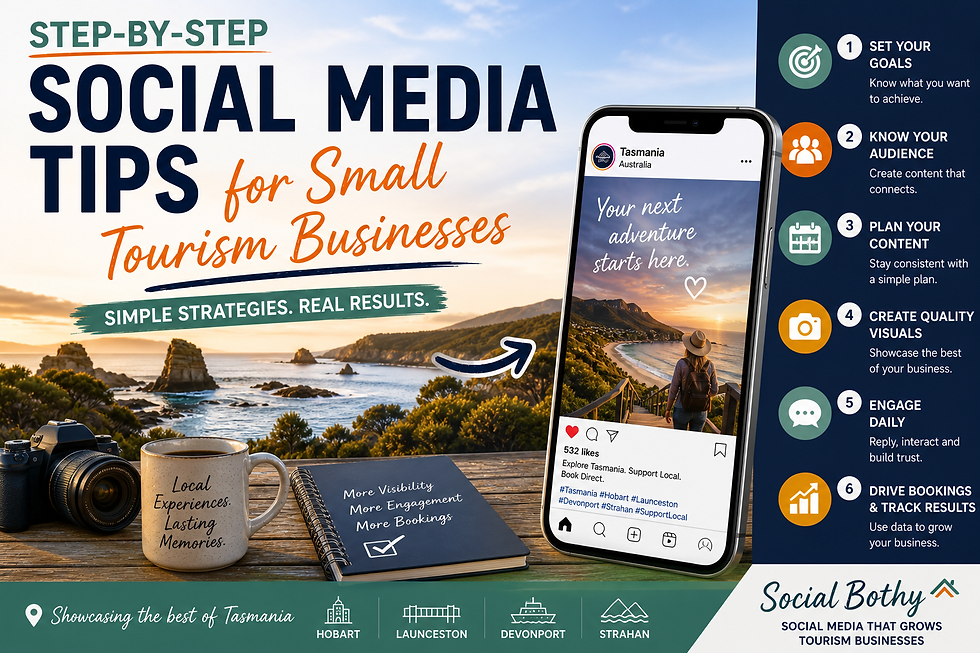
Step-by-Step Social Media Tips for Small Tourism Businesses
For small tourism businesses across Tasmania, social media is one of the most powerful tools to attract visitors, build trust, and increase bookings. Whether you operate in Hobart, Launceston, Devonport or Strahan, a well-planned social media presence can help you stand out in a competitive market.
However, many small operators struggle with where to start or how to stay consistent. The good news is that with a simple step-by-step approach, social media can become a reliable and effective marketing channel.
At Social Bothy, we work closely with tourism businesses to simplify social media and turn it into a consistent source of enquiries and growth.
Step 1 Define Your Goals and Audience
Before posting anything, it is important to understand what you want to achieve. Social media should support your business goals rather than just being an activity you maintain.
Some businesses aim to increase bookings, while others want to build brand awareness or promote specific services. At the same time, you need to identify your target audience. This may include couples looking for weekend getaways, families planning holidays, or international travellers exploring Tasmania.
When your goals and audience are clear, your content becomes more focused and effective.
Step 2 Optimise Your Social Media Profiles
Your social media profiles act as your digital storefront. When potential visitors discover your page, they should immediately understand what you offer.
Make sure your profile includes a clear description of your services, location details such as Hobart or Launceston, and a direct link to your website. Use a high-quality profile image and cover photo that reflects your brand and destination.
A well-optimised profile builds trust and encourages users to explore further.
Step 3 Create a Simple Content Plan
Consistency is key to success on social media. Without a plan, it is easy to post irregularly or run out of ideas.
A simple content plan helps you stay organised and consistent. Focus on a mix of content such as destination highlights, guest experiences, behind-the-scenes moments, and promotional offers.
For example, you might share scenic views from Strahan, local food experiences in Launceston, or coastal attractions near Devonport. Planning ahead ensures your content remains relevant and engaging.
Step 4 Focus on High-Quality Visual Content
Tourism is highly visual, which means your images and videos play a major role in attracting attention.
High-quality photos that showcase the beauty of Tasmania can significantly improve engagement. Natural lighting, clear composition, and authentic experiences help create a strong impression.
Avoid overly edited or unrealistic visuals. Instead, focus on capturing real moments that reflect what visitors can expect.
Step 5 Use Storytelling to Connect With Your Audience
People do not just book services, they book experiences. Storytelling helps bring your offering to life and creates an emotional connection with your audience.
Instead of simply posting a photo, describe the experience behind it. Share what a typical day looks like for a guest, highlight local culture, or tell the story of your business.
For example, describing a peaceful morning walk along the Hobart waterfront or a quiet evening in Strahan helps travellers imagine themselves there.
Step 6 Post Consistently and Stay Active
One of the biggest challenges for small businesses is maintaining consistency. Posting occasionally is not enough to build visibility.
Aim to post regularly throughout the week. This keeps your audience engaged and ensures your content appears in social media feeds.
Consistency also signals to social platforms that your account is active, which can improve your reach over time.
Step 7 Use Location Tags and Hashtags Strategically
Location-based visibility is essential for tourism businesses. Many travellers search for destinations when planning their trips.
By tagging locations such as Tasmania, Hobart, Launceston, Devonport and Strahan, you increase the chances of reaching users interested in those areas.
Relevant hashtags further improve discoverability and help your content appear in travel-related searches.
Step 8 Engage With Your Audience
Social media is not just about posting content, it is about building relationships.
Responding to comments, answering questions, and interacting with followers helps build trust and credibility. Potential visitors often look for businesses that are responsive and approachable.
Engagement also improves your visibility, as social platforms prioritise content that generates interaction.
Step 9 Promote Offers and Encourage Action
While informative and inspiring content is important, you should also guide your audience towards taking action.
Promote special offers, packages, or experiences that encourage bookings. Clear calls to action such as visiting your website or making an enquiry can help convert followers into customers.
For example, highlighting a weekend package in Hobart or a unique experience in Devonport can drive interest and enquiries.
Step 10 Track Performance and Improve Over Time
Social media is an ongoing process that improves with time. Monitoring your performance helps you understand what works best.
Pay attention to which posts receive the most engagement, clicks, or enquiries. Use this information to refine your content strategy and focus on what resonates with your audience.
Continuous improvement ensures your social media efforts deliver better results over time.
Building a Strong Social Media Presence
For small tourism businesses across Tasmania, social media offers a valuable opportunity to connect with travellers and grow consistently.
By following a structured approach, focusing on storytelling, and staying consistent, your social media can become a powerful tool for attracting visitors and increasing bookings.
At Social Bothy, we support tourism businesses in Hobart, Launceston, Devonport and Strahan with practical, results-driven social media strategies.
With the right guidance and approach, even small businesses can achieve strong visibility and long-term growth online.
FAQ
How often should small tourism businesses post on social media?
Posting several times per week is recommended to maintain visibility and engagement.
What type of content works best for tourism businesses?
High-quality visuals, storytelling, guest experiences, and destination highlights perform well.
Do hashtags really help tourism marketing?
Yes, relevant hashtags improve discoverability and help reach travellers searching for destinations.
Can social media increase bookings?
Yes, when used strategically, social media can attract visitors, build trust, and drive enquiries.


Comments