


Avoid These Common Social Media Mistakes in Tourism Marketing
Tourism businesses across Tasmania rely heavily on social media to attract visitors, build trust, and inspire travellers to book their next adventure. Platforms such as Facebook and Instagram have become powerful tools for showcasing stunning destinations, unique experiences, and authentic local stories.
However, many tourism operators in places like Hobart, Launceston, Devonport, and Strahan unknowingly make simple social media mistakes that limit their reach and reduce potential bookings.
By understanding these common pitfalls and learning how to avoid them, tourism businesses can transform their social media presence into a powerful marketing tool that attracts visitors from across Australia and beyond.
Posting Without a Clear Strategy
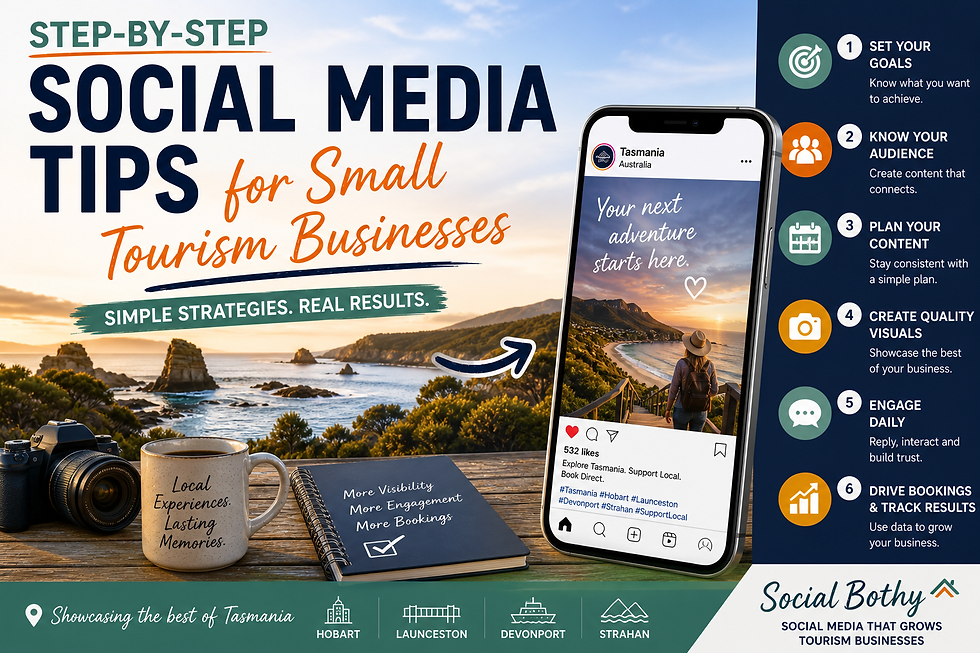
One of the most common mistakes in tourism marketing is posting content without a clear strategy. Many businesses share photos or updates occasionally but do not follow a consistent plan.
Without a strategy, social media content can appear random and disconnected from business goals.
Tourism operators should focus on creating a content plan that highlights experiences travellers are searching for. This may include showcasing seasonal attractions, local events, accommodation features, and behind-the-scenes moments that help visitors feel connected to the destination.
A simple content strategy helps businesses in Tasmania present a consistent brand and keep their audience engaged over time.
Ignoring the Power of Storytelling
Tourism marketing is not just about selling a service. It is about telling a story.
Visitors choose destinations because they want memorable experiences. Simply posting a photo of a hotel room or tour vehicle rarely creates excitement.
Instead, tourism businesses should focus on storytelling. Show what a day looks like for a visitor. Share moments such as watching the sunrise in Hobart, exploring historic streets in Launceston, discovering coastal views near Devonport, or experiencing wilderness adventures near Strahan.
When people imagine themselves in the story, they are more likely to book.
Poor Quality Visual Content
Tourism is a visual industry. Travellers want to see beautiful landscapes, unique experiences, and welcoming environments before they decide where to visit.
Low-quality photos or poorly designed graphics can harm a brand’s credibility.
Businesses should invest time in capturing high-quality images that reflect the true beauty of Tasmania. Clear lighting, well-framed scenes, and authentic experiences help social media posts stand out in crowded feeds.
High-quality visuals not only attract attention but also build trust with potential travellers.
Posting Too Infrequently or Too Often
Finding the right posting balance is important. Some tourism businesses post once every few weeks, which makes it difficult to maintain audience engagement.
Others post too frequently, which can overwhelm followers.
A consistent schedule works best. Posting several times each week allows tourism brands to remain visible without becoming repetitive.
Consistency helps social media algorithms recognise active accounts and increases the likelihood that posts will reach potential visitors planning trips to Tasmania.
Ignoring Local and Destination Tags
Location tags and hashtags are powerful tools in tourism marketing. Many travellers search social media using location-based keywords when researching destinations.
When businesses fail to tag locations such as Hobart, Launceston, Devonport, or Strahan, they miss valuable opportunities to reach people actively exploring those destinations online.
Adding location tags and relevant tourism hashtags increases the visibility of posts and helps attract travellers who are already interested in visiting Tasmania.
Not Engaging With Followers
Social media should never be a one-way communication channel.
Many businesses post content but do not respond to comments, messages, or questions from potential visitors.
Engagement builds relationships and trust. When tourism operators reply to comments or answer questions quickly, travellers feel valued and more confident about booking.
Active engagement also signals to social media platforms that the content is meaningful, which can increase reach and visibility.
Overly Promotional Content
Another common mistake is focusing only on promotions and sales messages.
While offers and packages are important, audiences tend to ignore accounts that constantly promote services.
A successful tourism social media strategy should include a mix of content such as travel inspiration, local recommendations, guest experiences, educational posts, and community stories.
By balancing promotional posts with engaging storytelling, tourism businesses create a more authentic and appealing brand presence.
Neglecting Analytics and Performance Tracking
Social media provides valuable insights that help businesses understand what content works best.
Unfortunately, many tourism operators never review analytics data.
Tracking engagement, reach, and audience behaviour helps identify which posts attract the most interest. Businesses can then refine their strategy and create more of the content travellers enjoy.
Data-driven decisions lead to stronger marketing results and improved visibility.
Turning Social Media Into a Booking Tool
Avoiding these common mistakes can significantly improve the effectiveness of tourism marketing on social media.
When tourism businesses in Tasmania focus on storytelling, visual quality, audience engagement, and strategic planning, their social media channels become much more than simple communication platforms.
They become powerful tools that inspire travellers, build trust, and encourage bookings.
For tourism operators in Hobart, Launceston, Devonport, Strahan and across Tasmania, a thoughtful social media strategy can transform online visibility into real business growth.
With the right approach, social media becomes an essential part of attracting visitors and sharing the unique experiences that make Tasmania such a remarkable destination.
FAQ
Why is social media important for tourism businesses in Tasmania?
Social media allows tourism operators to showcase destinations, share experiences, and inspire travellers who are researching their next trip. It also helps businesses reach audiences beyond Tasmania.
How often should tourism businesses post on social media?
A consistent posting schedule of several times per week is generally effective for maintaining engagement and visibility.
What type of content works best for tourism marketing?
High-quality photos, travel stories, visitor experiences, local attractions, and behind-the-scenes moments tend to perform well.
Which social media platforms are best for tourism businesses?
Platforms such as Facebook and Instagram are highly effective for tourism marketing because they focus on visual storytelling and audience engagement.


Comments